

Real estate’s old playbook is obsolete. AI is the new architect
Real estate’s old playbook is obsolete. AI is the new architect
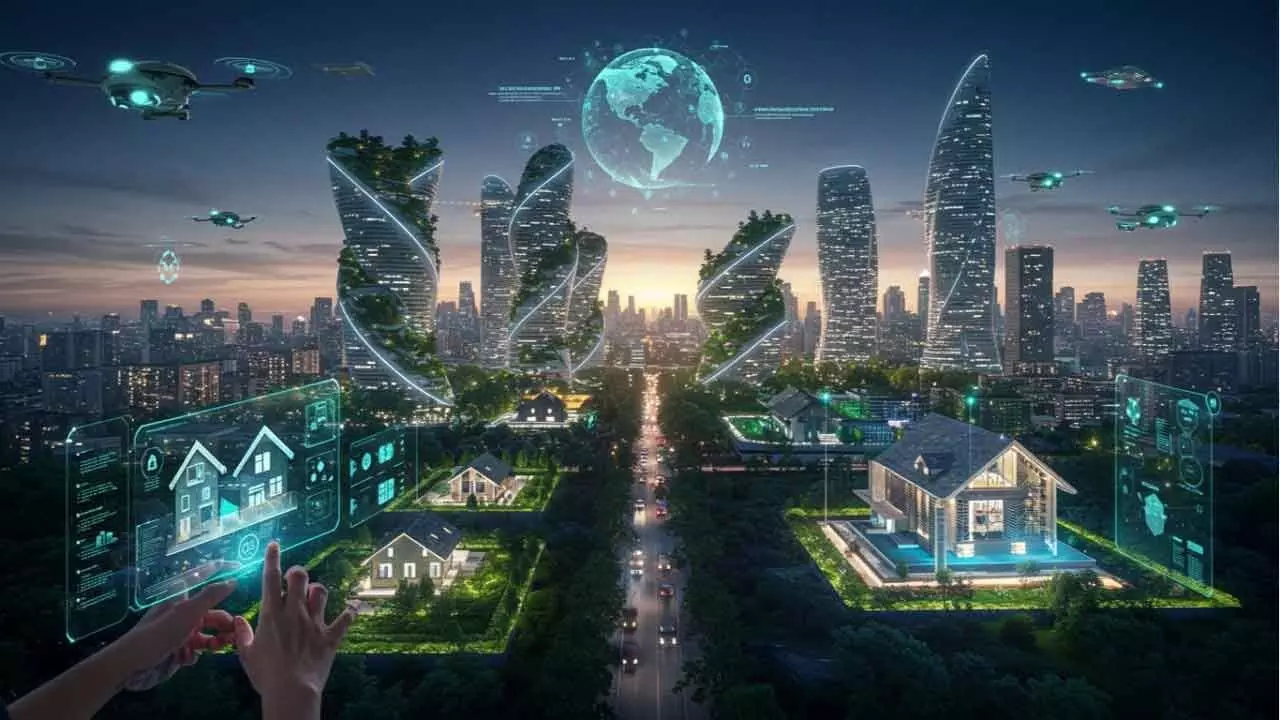
It is an algorithmic turn in Indian real estate, unmistakably so. Artificial Intelligence is no longer an emerging technology; it is an embedded force reshaping industries with quiet inevitability.
From manufacturing floors to financial markets, AI is recalibrating how decisions are made and value is created. India’s AI market, estimated at roughly $10 billion, may still be nascent, yet its transformative potential is undeniable.
Few sectors are as primed for reinvention as real estate — an industry long governed by instinct, opacity and fragmented processes.
The change begins at conception. Design and planning, traditionally iterative and time-intensive, are being reimagined through hyper-realistic AI simulations and generative 3D models. Architects and developers can now test structural resilience, environmental impact and aesthetic coherence in virtual environments before committing capital.
Predictive cost engines promise sharper budget accuracy, reducing overruns that routinely erode profitability and delay delivery. In a business where time is money, foresight is power.
Planning inefficiencies — the chronic fault line of infrastructure development — are also set to diminish. AI-enabled scheduling systems dynamically allocate labour, materials and equipment using real-time data.
By synthesising inputs from contractors, suppliers and regulatory frameworks, these systems anticipate disruptions rather than merely reacting to them. The outcome is not just speed, but structural discipline.
On construction sites, the shift is even more visible. AI-guided drones can map progress with granular precision, while vision-based safety systems monitor compliance and detect hazards instantaneously.
Predictive analytics identify workflow inefficiencies, recommend corrective measures and optimise resource deployment. Instead of episodic supervision, construction sites evolve into interconnected digital ecosystems — responsive, monitored and continuously improving.
True disruption, however, may unfold in the marketplace itself. Property discovery is moving beyond static listings toward personalised digital journeys. AI platforms curate options aligned with a buyer’s financial capacity, lifestyle preferences and long-term investment goals.
Automated valuation tools offer data-driven pricing benchmarks, narrowing the trust deficit that has historically clouded transactions. Immersive virtual tours and predictive investment modelling allow stakeholders to assess risk and reward with unprecedented clarity.
Post-sale, the lifecycle continues to evolve. Smart buildings powered by sensor networks, adaptive lighting and intelligent access systems are redefining occupancy.
AI-driven management tools monitor energy consumption, anticipate maintenance needs and enhance security in real time. Buildings, in effect, become responsive environments rather than inert assets.
For India, where rapid urbanisation intersects with rising consumer expectations, this technological convergence offers more than operational gains. It promises transparency in pricing, efficiency in execution and sustainability in long-term management.
PropTech, underpinned by AI, has the potential to formalise and modernise a sector that contributes significantly to GDP yet has lagged in technological adoption.
The transformation will not be instantaneous, nor uniformly distributed. Regulatory adaptation, data governance and skill development will shape the pace of change. But the direction is clear. Indian real estate is entering an algorithmic era — one where bricks and bytes converge to redefine how cities are imagined, built and lived in.





